
How to select a PP grade: MFR ranges for injection molding, film and fiber
PP Selection · 2026year10month2day
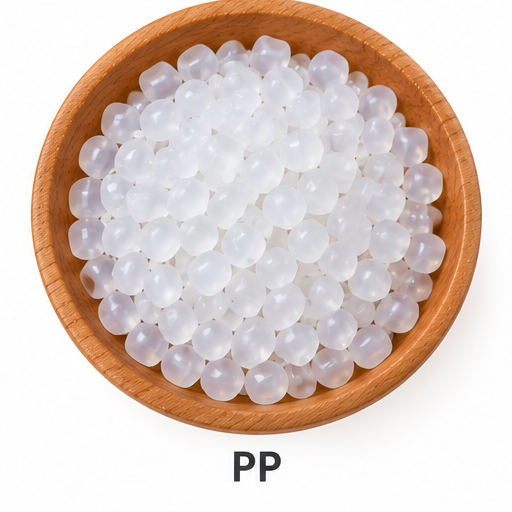
The first step in selecting a PP grade is not asking for a specific melt index. First identify whether the process is injection molding, film, fiber, monofilament or blow molding. Within the same material family, higher MFR usually improves flow, but the balance of melt strength and mechanical performance also changes.
Different producers may report MFR, MFI or different temperature/load conditions. Align the test conditions before comparing results.
Using three SABIC PP grades to understand MFR differences
| grades | MFR conditions | official positioning |
|---|---|---|
| 571P | 5.7 g/10 min,230°C/2.16 kg | General Injection、good of surface hardness |
| 575P | 11 g/10 min,230°C/2.16 kg | rigid injection-molded parts, stable processing and high gloss |
| 576P | 19 g/10 min,230°C/2.16 kg | Good flow for complex or thin-wall injection molding |
For homopolymer PP, 5.7, 11 and 19 are not simply better or worse grades; they correspond to different mold-filling, holding-pressure and part-geometry requirements. High-flow grades usually fill thin-wall parts more easily, but warpage, sink marks, weld lines and drop performance still need to be checked.
Process Selection Guidance
- General Injection Molding: Start with medium and higher MFR grades. Validate mold filling, shrinkage and surface quality before deciding whether more flow is needed.
- thin-wallinjection molding: A higher-flow grade may be needed, but rigidity, impact performance and the mold-temperature window must also be confirmed.
- BOPP / cast film: Focus on a dedicated film grade, molecular-weight distribution, heat sealing, haze, rigidity and the additive system. Do not replace it directly with an injection grade.
- Spunbond and filament: Focus on spinning-grade MFR, melt stability and filtration performance. Purge the line and validate stretching before changing material on the production line.
How to distinguish homopolymer, random copolymer and impact copolymer
Homopolymer PP generally favors rigidity and heat resistance; random copolymer more readily achieves transparency and flexibility; impact copolymer focuses on low-temperature impact and housing toughness. Specify copolymer type, MFR, ash/additives, color and food-contact requirements in the inquiry.
PP incoming inspection recommendations
In addition to packaging and grades, spot-check MFR, ash/black specks, color, pellet uniformity and COA consistency. For film or fiber customers, also validate actual line speed, melt pressure, broken filaments or crystal points and product appearance.
Reference Documentation
Grade positioning and MFR data reference SABIC's official PP product pages and product manuals: SABIC China PP product page、SABIC PP typical data manual. Actual data is subject to the latest TDS for the target grade.
Tell usyou of PP process
Provide the product, equipment and target MFR; we will screen grades for injection molding, film or fiber applications.